




History On Tap
The Craft Beer boom has inspired many brewers to completely break down the barriers of what beer is and can be. Every year new styles are created with some becoming very popular like the Hazy IPA, and some disappearing as if they never existed like the Brut IPA. As these new styles are being innovated, other “extinct” styles and processes are being discovered, studied, and revived in our local taprooms. Beers which were lost to cultural, political, and even religious reasons are making a comeback in today’s craft beer industry.
The Kentucky Common
Unlike extinct international styles being revived, the history of this style originates right here in America. It’s essentially a “dark cream ale”, using native six-row barley and a moderately high amount of corn in the grain bill. Before modern refrigeration, most breweries depended on ice stored from the previous winter for producing beer. The Louisville area or Kentucky usually did not have the weather conditions to produce enough ice for this. With an influx of European immigrants into Louisville during the mid 19th century, there was an increased demand for beer in the area. Common beer was fermented at higher temperatures like an ale, but was aged for a very short period of time (if at all) before being consumed, thus eliminating any need to keep it cool. This kept overhead costs down and made it inexpensive to purchase, so it was very popular among working-class people. Prohibition killed off this once-extremely popular, hyper-local style.
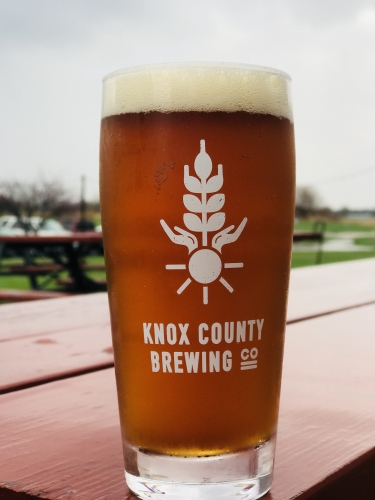
I spoke with Matthew Hansen of KCBC in nearby Galesburg about their Kentucky Common:
Based on what we know about the beer historically, would you say KCBC brews it fairly true to style or are you taking some creative freedoms to modernize it?
I think it is a both/and. Sarah and I love, and I can't stress this enough, the history of beer and how different particular histories evolve around specific styles. So there are two ways in which we attempt to hold true to both the spirit of the beer, and the actual style itself.
It starts with ingredients - we stick with the six-row and malted corn, and to reach the color profile we add a bit of Caramel malt. History tells us that this was a hyper-local beer, made with hyper-local ingredients that reflected the landscape and people it hydrated, as some histories claim that this beer probably didn't travel far beyond the Louisville area. While this isn't specific to our Common Place Kentucky-style Common ale, the fact is that from the hops and grains, this is a hyper local beer that I believe represents the landscapes and people of the Midwest.
Another way that the Common Place beer reflects the history of the Kentucky Common is in our equipment. For instance, our Mash Tun is manual at best. I have to drag a platform over to it, carry the grains up the platform, dump them in, and hand stir the mash. We don’t have fancy mechanisms to make sure we can control the mash and sparge. Don’t get me wrong, we don’t just randomly guess, but our system definitely leans to the art side of brewing more than the science of it. Some of the advancements that we have today that allow modern brewers to dial things in to exact 10th of degrees and water precisions, we just don’t use those, which automatically makes our process a little more old world. It forces us to be more in tune with what is going on. I absolutely have nothing against modern advancements. I love innovation, but we wanted, to some degree, to be connected with the way it used to be done. Now, we don't use fire to boil, and we do have pumps and a heat exchanger, but you get the point. So, while we try to stay true to the outline and spirit of the Kentucky Common, I'm pretty sure with the innovation we do use, and the advancements in grain malting and yeast alone, it can't help but be modernized a bit.
_375_500.jpeg)
There's some strongly debated interpretations about whether this style was slightly sour, what's your stance on this?
I don't have a strong opinion. That being said, this beer comes from the land of moonshine and bourbon…so these folks knew what they were doing. I'm guessing if this beer style carried on into the hills during prohibition it was certainly sour. And if this beer was hyper-local, I'm guessing it was made by and for a hyper local farming force, so it wouldn't surprise me if the science and care of yeast hadn't made its way to them yet. I certainly could be wrong, they knew what they were doing, so it could have. I want to believe it wasn't sour. I want to believe that if someone climbed in the DeLorean and flipped the flux capacitor, and came into KCBC and ordered a Common Place that they would assume that the hills of Kentucky were right out our doors.
Only a handful of breweries make this style commercially but this beer seems to keep returning to your tap lists. Why is it important for Knox Co. to continue to keep the style alive?
I think I speak to that a bit in the first question, but histories are written by the powerful, the winners, those that survived as the fittest. We love to remember the Rockefellers, Carnegies, and Fords; but those people could have never done it without those that we have no record of. Those who were silenced and overshadowed by the rich. Those that died early in life due to their extreme labor, those who came down with illnesses that the wealthy and powerful had the privilege to avoid. We never get to hear from the other side, or underside of history. The history of beer is full of stories of poor, hard working farmers, porters, and line workers that had to use imagination and whatever they had available to them to enjoy life. A commitment to these old world beers and pre-prohibition beers is a way we can keep their story alive, connect our folks with a past that is left out of history books, or at least overshadowed by the glamorous stories of the rich and powerful. It's their history, in the form of a beer. As for the Kentucky Common style specifically, as mentioned above, the two we tried we loved. Second, I took some time through Wendell Berry (farmer, philosopher, and activist) to study the hard life of the Kentucky farmer, and having that as a sort of filter in my brand as I drank the beer really made it come alive to me, and I wanted to reproduce it. The truth is, the very first beer we sold here, even before our doors were opened, was a small five gallon keg of an old Scandinavian recipe found in Bishop Hill, written down by Scandinavian immigrants in the 1800s. We love that stuff! So, the Kentucky Common that keeps showing up on our menu represents the old styles we like, a nod to those who go unheard in history, and the idea that often times, beer is the conduit or the platform that de-powers the different elements like class, status, and power and gives us a common place around the table to enjoy our humanity.
_375_500.jpeg)
The London Pale Ale
Sometimes beer styles are adapted and changed so much that they have completely lost their origin. If you had a Pale Ale in London in the late 1800’s, it wouldn’t be anything like the heavily-hopped American version we are used to today. Twin Span’s Head Brewer, Adam Ross, has decided to brew a London Pale Ale recipe from 1893 as historically accurate as he can to give people a taste from the past. While it isn’t technically “extinct” as a style, the processes and fundamentals of the style are night and day different.
Here’s what Adam had to say about the beer:
You could have easily made an American Pale Ale jam packed with cascade and centennial hops. What prompted you to revive a basically “extinct” beer style and the processes that go with it?
I think of brewing and tasting these old styles as a way to connect to the past and our predecessors - to see what they ate and drank. And there was a reason a given style or brand lasted long enough to make it historic.
This London Pale looked an awful lot like a modern IPA despite being 100+ years old. A good base malt, a sugar not many Americans are used to was added to dry things out, and a ton of hops. Light, crisp, and hoppy. And it was meant to be consumed with a meal, which is sort of our thing at Twin Span.
What actually are the differences?
I couldn't source the same exact ingredients. It's impossible to get real 19th century malt, hops, and yeast, but I got as close as I could. As long as I was in the ballpark and hit the numbers in the recipe, I consider that a win. And I did just that.
Same with process. They had equipment and methods we just don't have today, but the essence is the same.
I hope modern drinkers like the taste. It is quite bitter for today's palates, but I'd say it's aligned with palates from just 10 years ago. These things are cyclical. I don't think I've gone far enough back in time with this recipe to find something that modern palates would struggle with.
You brew a lot of obscure traditional European beer. Why is that important to you as a brewer and Twin Span as a brand?
It wasn't always obscure. These styles had their moment of fame and favor. Very few truly bad beers would be brewed more than once. Those brewed enough times to create a style must have some merit. Picking out which fell out of favor due to cultural shifts/war/etc. versus those that were replaced by something better is the challenging, yet fun, bit.
I don't know if there's motivation to tie that to the Twin Span brand - it's just something I'm interested in and I think is worth sharing with others. If no one drinks these beers, I'll admit they should have stayed in the past and I won't brew them again, but each one so far has had its fans.
What are some other “extinct” styles or brewing processes you'd like to brew and have your customers experience?
Steinbier would be a lot of fun, but I don't know if I could pull it off. I've had a few over the years and they've all been good. I have a recipe for a dark lager brewed in Victorian England. There was a moment where they bucked the trend of the light (in color) lagers that were taking over Europe and sort of applied their knowledge of porter into lagers. It sounds tasty. I'll brew it eventually. I've found references to Dunkel and Weisse Bier in Davenport in the 19th century with local ingredients. I may have to brew those!
Then there’s Cock Ale, of course. A 17th or 18th century English ale fortified with a whole chicken in the kettle. I keep threatening my partners that I'll brew that. My wife and I raise chickens now so it's becoming closer to reality…
_500_500.jpeg)
About the Author:
Charlie Cole is a professional brewer and multimedia beer promoter. He is a graduate of St. Louis University in Brewing Science and Operations, a previous brewer at three different Quad Cities breweries, a certified beer server through the cicerone program, and hosts the What’s Tappening podcast and weekly local beer segment on 97X FM.