The Putnam Museum and Science Center in Davenport – a literal institution in the QC since 1867 – has been a major focus in my family’s three-decade residence in the area. Not only did my wife Betsy and I raise our two science-obsessed sons here, and have made countless visits over the years, but she has been a vital staff member (a current vice president in charge of fundraising) for 15-plus years.
The Putnam: Re-Imagined Capital Campaign that began nearly 10 years ago as a masterplan is reaching its conclusion, and a new permanent exhibit reveals more of the Davenport museum’s quarter-million-piece collection.
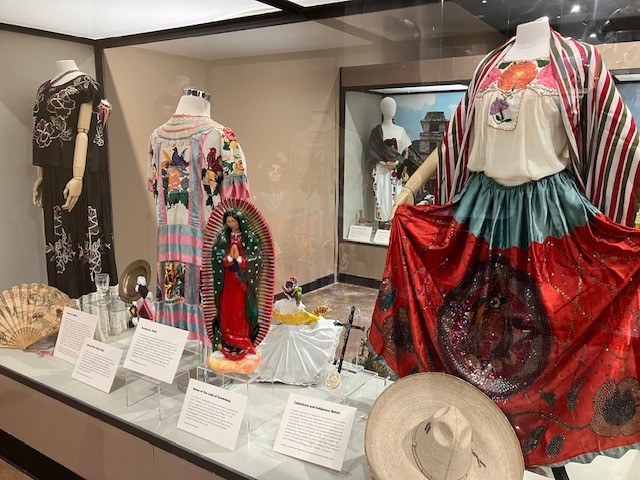
The major renovation project (at 1717 W. 12th St., Davenport) started with two long-time exhibits—Rivers, Prairie, & People and the East Asian Gallery, now Common Ground: Our Voice, Our Stories and the World Culture Gallery – getting major updates in inclusivity, modernization, and expansiveness. The World Culture Gallery has additional space for temporary exhibits, and currently hosts the very colorful Indigenous Roots of Mexican Americans alongside its permanent displays.
The creation of the second-floor Quad City Innovators was included in the Capital Campaign, which required complete renovation of what was once the Hall of Gems & Minerals and part of the Palmer Gallery.
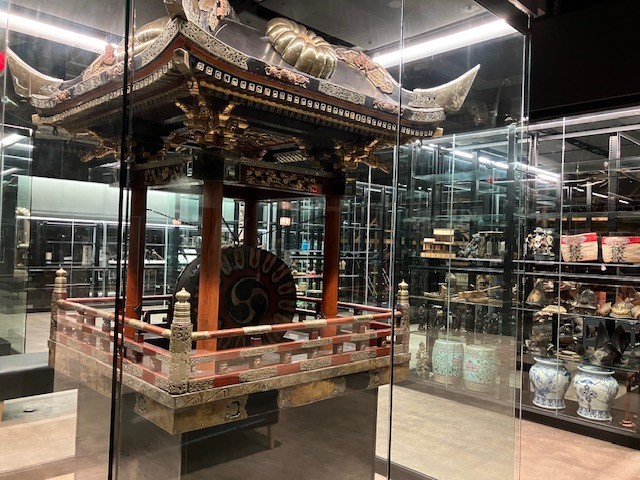
The crown jewel of the project is The Vault (opened in July), which is an impressive new permanent exhibit just off the World Culture Gallery, and will give you many new reasons to visit this local treasure (which itself houses priceless treasures from around the world), now and for months to come.
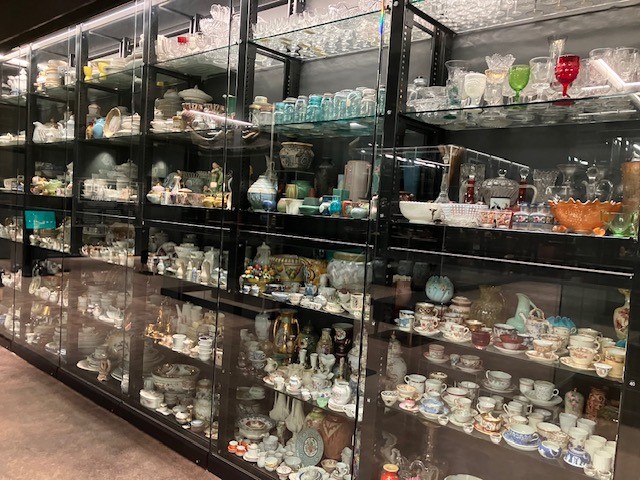
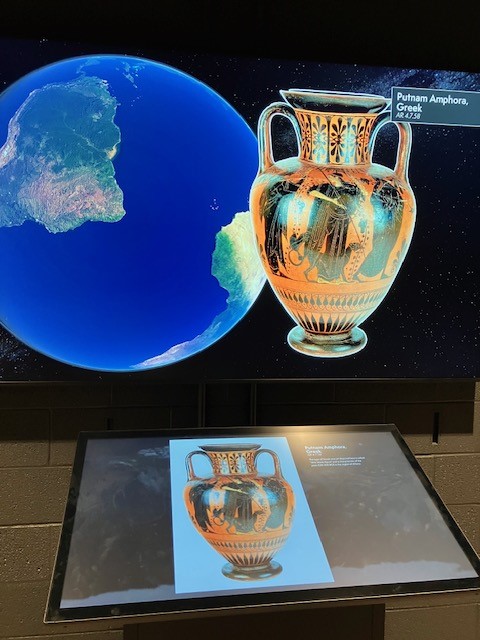
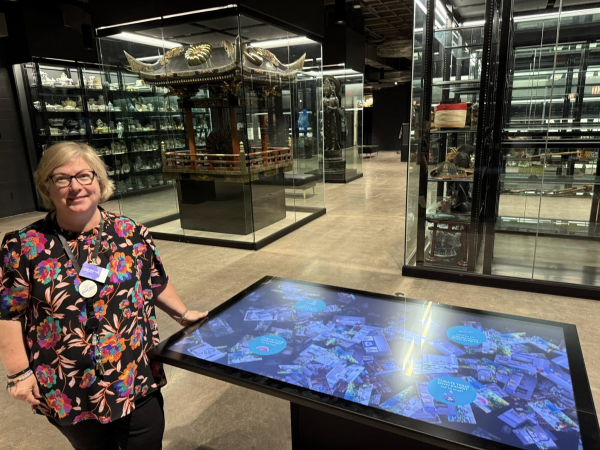
The unique, innovative open storage allows more of the museum’s 250,000-item collection into public view, with large glass cases and visible shelving, some empty shelves yet to be filled. Throughout the exhibit, there are many touch screens which allow visitors to search the database for objects that have come from around the world, learn about items, about the Putnam’s history, as well as to create their own exhibit.
It’s common for museums everywhere to only showcase a fraction of its entire collection for public view, but now The Vault will triple the amount of objects in the Putnam collection (pieces from all seven continents) on permanent display, from 3 percent to about 10 percent.
I had not visited the Putnam in far too long, and I recently got to admire the new exterior (fittingly purple) renovations, with new signage, outdoor patio furniture, and new welcome displays inside the main lobby, before you enter World Culture Gallery.
Part of that new display notes: “The Putnam bridges the past and the present, the local and global, the seen and unseen. Our collections tell stories that resonate across time and culture, stories that encourage understanding, empathy and action. You might leave inspired by the return of the bald eagle on the brink of extinction, eager to champion your own conservation efforts. Or perhaps the voices of diverse Quad Cities communities will reshape how you see our shared heritage.”
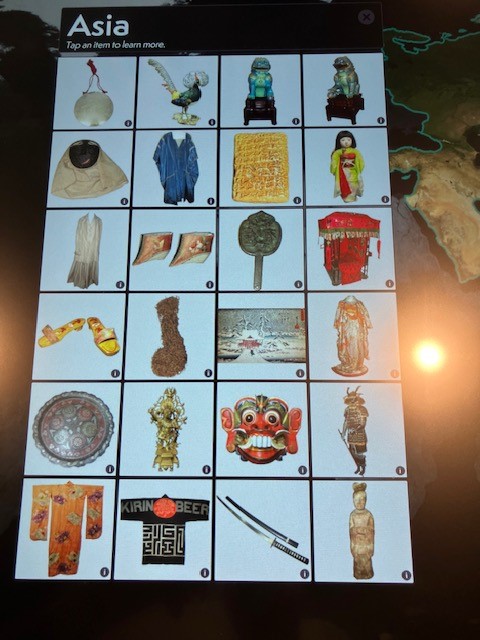
The Putnam exists to preserve, educate and connect – linking people from the region to the wider world and its boundless wonders. In The Vault, you can interact with huge touch screens that let you pick a part of the world, and learn about specific items in the collection (they are part of the permanent collection but not necessarily in the new Vault display).
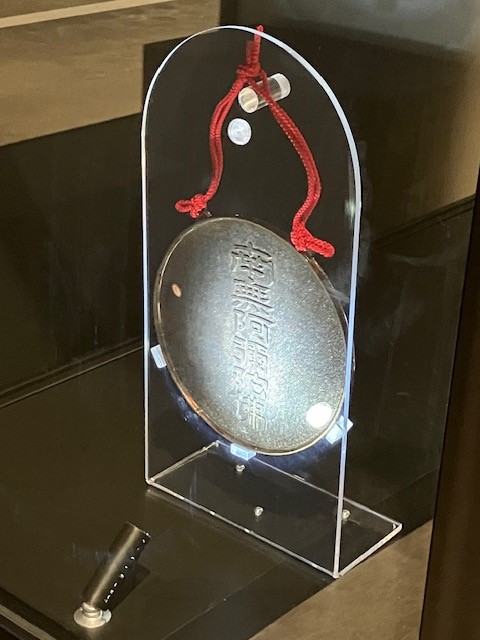
One of the most unusual, rare items that is on view is a Japanese “magic mirror” that the Putnam identified and introduced in 2022. Former Davenport mayor Charles Ficke (whose collection launched the first Davenport art museum in 1925) gave this magic mirror (undated, likely from the 19th century) to the Putnam in 1904 after his trip to Japan. It’s one of just three of its type known in the United States.
No one remembered it was magic until 2022, following the staff discovery of a similar mirror at the Cincinnati Art Museum. The mirror reflects an image of Buddha (only visible in CT scan) standing on a lotus surrounded by rays of light. The Putnam does not know who created the mirror or how it was created.
The mirror’s magic properties are a result of careful craftsmanship. It’s made of two plates sandwiched together – on the back, is a visible inscription in Chinese, “Amitabha Buddha.” The front plate has a smooth, polished surface – serving as a mirror.
However, on the reverse side of the front plate, hidden between the layers of bronze, is an image of Buddha. The key to being able to see the image is polishing the mirror to a thickness of one millimeter in the thinnest spots. This leaves the negative space around the Buddha thinner than the lines of the Buddha himself. By creating a microscopic variation in the line depth, Buddha’s reflection is visible.
Most of the display cases at The Vault do not have any labels, because they are considered open storage. The museum plans to add ways for people to learn more about specific items with QR Codes in the future. People can also use the search stations to look things up. The Putnam will fill the current empty shelves completely (from floor to ceiling) over the next 9-12 months. This allows guests to discover new things over the next year, every time they visit.
While it’s admirable to open up more items for display, it would make it more user-friendly to provide better ways to discover what the new display cases contain. The Putnam has made it much easier to find out about its vast collection both in person and digitally.
There are also new “Imagine Yourself” stations throughout the building which guide guests through different paths to learn how people contribute to museums. Even if I didn’t have such a close family connection to the Putnam, it’s easy to see how hard the Putnam staff works to ensure this institution is not stuck in amber, stuck in the past – but continuously grows and evolves and modernizes to showcase the importance of learning from our local and world history, and charting a better future.
Jonathan Turner is a veteran journalist and piano player, who has made the QC home since 1995 and loves writing about arts and culture. He is the author of the books “A Brief History of Bucktown: Davenport's Infamous District Transformed,” and “100 Things To Do in the Quad Cities Before You Die”.